How the calculation works
Heater makers rate each model for a range of room volumes, for example 8 to 13 cubic metres. The calculator turns your room into an effective volume you can check against that range:
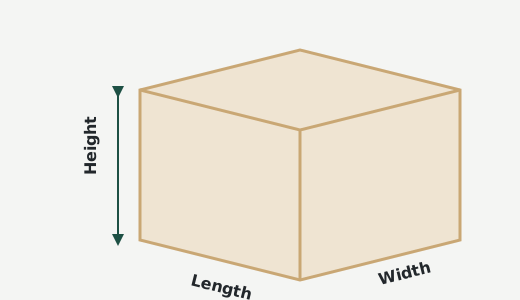
- Room volume: length × width × height.
- Cold surfaces: glass, tile, concrete and stone absorb heat, so about 1.2 m³ is added for every square metre of such surface (roughly 4 cu ft for every sq ft).
- Log walls: an uninsulated log room takes much longer to heat, so the volume is multiplied by about 1.5.
- Output: the kW range shown assumes roughly 1 kW for every 1 to 1.4 m³ of effective volume.
Use the result the right way
The kW figure is a guide, not a purchase decision. Always check the room volume range printed on the heater's spec sheet; it already includes the maker's own allowances. If your effective volume sits between two models, choose by how you use the sauna:
- Choose the larger heater for a cold climate, an outdoor sauna or a room with a big window.
- Choose the smaller heater if the room is well insulated and you like gentler heat.
- Remember that a heater full of stones warms up more slowly but gives better steam; see sauna stones.
- Remember the electrical side. A larger heater needs a larger breaker and wire; see wiring a 240 V sauna heater in Canada.
What room a 4.5, 6, 8 or 9 kW heater suits
Using the same rough guide of 1 kW for every 1 to 1.4 m³ of effective volume, common heater sizes match these rooms. Each maker sets its own range for each model, so check the spec sheet before buying.
- 4.5 kW: about 4.5 to 6.3 m³ (159 to 222 cu ft)
- 6 kW: about 6 to 8.4 m³ (212 to 297 cu ft)
- 8 kW: about 8 to 11.2 m³ (283 to 396 cu ft)
- 9 kW: about 9 to 12.6 m³ (318 to 445 cu ft)
A 6 kW heater draws about 25 A at 240 V and a 9 kW heater about 37.5 A, so the size also decides the breaker and wire; see the 240 V wiring guide. For the actual installation, read how to install a sauna heater.