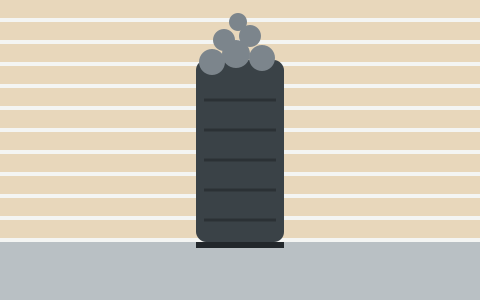
The stones in a sauna heater store the heat and make the steam. Use dense rocks made for saunas, stack them loosely around the elements, and check them every year. Here is how to choose, load and replace them.
The stones are the part of the heater you actually feel. They store heat while the heater is on, radiate it into the room, and turn water into steam when you ladle it on. A good load of stones gives steady heat and soft, long-lasting steam. Too few stones, the wrong kind, or stones packed badly give weak steam, uneven heat and can shorten the life of an electric heater's elements.
Which rocks to use
Sauna stones need to survive thousands of cycles of heating to several hundred degrees and sudden cooling when water hits them. Dense, fine-grained rocks with little quartz handle that best. These are the common choices:
Stone
What it is
Notes
Olivine diabase
Dense dark volcanic rock, often quarried in Finland
The most widely sold sauna stone; holds heat well and lasts
Peridotite
Very dense, olivine-rich rock
Heavy and durable, often sold as a premium sauna stone
Gabbro and similar dark stones
Coarse dark volcanic rock
Used by some makers; check the heater manual
Soapstone
Soft, very heat-retentive stone
Stores a lot of heat; sold for some heaters and stoves
Ceramic stones
Manufactured heat-resistant shapes
Only where the heater maker allows them, usually mixed with natural stones
Rough, split stones have more surface for steam than smooth, rounded ones. Many people mix split stones for steam with a few smoother ones for looks on top.
Rocks to avoid
River and lake rocks. They can hold water inside and may crack or burst when heated.
Rocks with visible quartz bands or flint. Quartz expands unevenly and splits under heat.
Limestone and other soft sedimentary rocks, which crumble and give off dust.
Painted, glazed or decorative stones not sold for saunas.
Buy stones sold for saunas. They are tested for heat cycling and are cheap compared with replacing a heater element.
Size and quantity
Use the stone size and weight given in the heater manual. As a guide:
Electric heaters usually take stones of about 5 to 10 cm (2 to 4 in). Small wall heaters may need only around 20 kg (45 lb).
Tower heaters and wood stoves take larger stones and much more of them. A heavy wood stove such as the Kuuma BluFlame holds up to 275 lb.
The amount matters. More stone means a slower warm-up but steadier heat and better steam, which is why stone-heavy designs like HUUM, IKI and the Harvia Cilindro are popular. The trade-off shows in how long the room takes to reach bathing temperature.
Loose stacking lets air flow through the stones and around the elements.
How to stack stones
Rinse the stones and let them dry to remove dust, which otherwise smells when it burns off.
Put the largest stones at the bottom and the smaller ones towards the top.
Stack loosely so air can move between the stones. In an electric heater, place them around the elements without wedging them against the elements or bending them.
Cover the elements completely, but do not build a tall pile above the heater rim unless the manual shows one.
Run the heater with the door and vents open the first time, as any remaining dust burns off.
Stones packed too tightly block airflow. The elements then run hotter, the heater may trip its high-limit cut-out, and the elements wear out early. If your heater keeps switching off, read sauna heater not heating.
Throwing water
Use clean tap water and a ladle, a little at a time, aimed at the stones rather than the heater body or controls. Wait for the steam wave to pass before adding more. Seawater, pool water and water with essential oils poured straight on can damage stones and heaters; if you want a scent, use a product the heater maker approves, diluted in the bucket.
When to replace them
Stones slowly break down from heat and water. Check them at least once a year, or more often in a sauna used daily:
Lift the stones out and remove any that are cracked, crumbled or have turned powdery.
Clean out grit and fragments from the bottom of the heater.
Re-stack the good stones with fresh ones to make up the weight.
Many makers suggest re-stacking every year and replacing stones every year or two in regular home use. Heavy use, such as a daily sauna or a commercial room, needs it more often.
Brand-specific rules
Some heater makers set their own stone rules. HUUM, for example, ties its warranty to using HUUM stones placed as its manual shows. Others sell their own stones but accept any stones of the right type and size. Always follow the manual for your model; brand pages such as Harvia and HUUM link to each maker's site.
Questions buyers ask
What are the best stones for a sauna?
Dense, fine-grained rocks made for saunas, such as olivine diabase and peridotite. They handle repeated heating and water without cracking. Use only stones sold for sauna heaters.
Can I use river rocks in a sauna?
No. River and lake rocks can hold water inside and may crack or burst when heated. Buy stones tested for sauna use.
How often should sauna stones be replaced?
Check them at least once a year, remove cracked or crumbling stones and re-stack the rest. Many makers suggest replacing stones every year or two in regular home use.
How many stones does a sauna heater need?
It depends on the heater. Small electric wall heaters may take around 20 kg (45 lb), while tower heaters and wood stoves take much more. The heater manual gives the exact weight and size.
Last checked November 8, 2026. Facts come from the brands' own sites and documents. How we check