Gas and propane sauna heaters

A gas sauna heater burns natural gas or propane under a load of stones and vents through a flue. It suits sites where a 240 V circuit is impractical or gas is already on hand. Here is how they work, what installation involves and who makes them.

Gas sauna heaters are rare. Most saunas in North America use electric heaters or wood stoves, and only a handful of makers still build gas units. They fill a real gap, though: a sauna that needs serious heat where adding a 240 V circuit is impractical, or a commercial site that already has a large gas supply.

How a gas sauna heater works

A gas sauna heater burns natural gas or propane in a sealed or vented combustion chamber under a load of sauna stones. The flame heats the stones and the steel body, which heat the room just as an electric heater or wood stove does. Exhaust gases leave through a flue to the outside. You can throw water on the stones for steam in the usual way.

Output is quoted in BTU per hour rather than kilowatts. As a conversion, 1 kW equals about 3,412 BTU/h, so a 40,000 BTU heater has a burner input of roughly 11.7 kW and an 80,000 BTU heater roughly 23.4 kW. Burner input is not the same as the heat delivered to the room, because some heat leaves through the flue, so compare gas and electric heaters by the room sizes their makers recommend rather than by raw numbers.
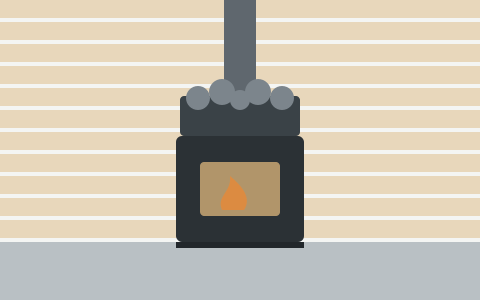
Illustration of a fuel-fired sauna stove with stones on top and a flue pipe, similar in layout to a gas sauna heater
Like a wood stove, a gas heater needs a flue; unlike one, it is lit and controlled automatically.

When gas makes sense

  • Your electrical service has no room for a large heater and an upgrade is costly or slow.
  • The site already has natural gas, or you keep propane for heating, cooking or a generator.
  • You want a large, fast-heating sauna, for example at a gym, club, camp or lodge.
  • You want sauna heat without tending a fire, where a wood stove would be the other option.

Gas makes less sense for a small home sauna with an adequate electrical panel. An electric heater is simpler to install, needs no flue and is far more widely supported by dealers.

Gas vs electric vs wood

GasElectricWood
Supply neededNatural gas line or propane tankDedicated 208/240 V circuitFirewood
VentingFlue to outsideRoom ventilation onlyChimney
ControlAutomatic ignition and thermostatAutomatic, timer and apps availableManual, you tend the fire
InstallerLicensed gas fitterLicensed electricianChimney installer; often a building permit
Choice of modelsVery limitedVery wideWide

Natural gas or propane

Gas appliances are built for a specific fuel. A heater set up for natural gas will not run correctly on propane without the maker's conversion kit, and the conversion should be done by a licensed gas fitter. Propane suits rural and off-grid sites with a tank; natural gas suits buildings already on a gas line. Check which fuel a model is supplied for before you order.

What the installation involves

  1. A licensed gas fitter runs the gas line, connects the heater and tests for leaks.
  2. The flue goes through the wall or roof to the outside, using the venting parts and clearances in the heater manual.
  3. The room still needs a fresh-air supply for bathers and, depending on the design, for combustion. See sauna ventilation.
  4. In Canada, gas appliances and their installation fall under provincial gas safety rules based on the CSA B149 installation code, usually with a permit and inspection.
  5. The heater itself must be certified for use in Canada for the fuel you will use.

Who makes gas sauna heaters

Very few brands do. The best known in North America is Scandia of Boise, Idaho, which makes 40,000 and 80,000 BTU gas sauna heaters alongside its Ultra electric range. Most other brands on this site, including Harvia, HUUM and Finnleo, focus on electric heaters and wood stoves. Compare them in the sauna heater brand comparison.

Safety checklist

  • Only use a gas heater sold and certified as a sauna heater; never improvise with a patio or space heater.
  • Have the installation done and inspected by licensed professionals.
  • Fit a carbon monoxide alarm in the building, outside the hot room.
  • Have the burner and flue serviced as the maker recommends.
  • Keep combustibles, towels and benches at the clearances shown in the manual.

Questions buyers ask

Are gas sauna heaters safe?

When a certified gas sauna heater is installed by a licensed gas fitter with a proper flue, fresh-air supply and a carbon monoxide alarm in the building, it is designed to be used safely. Never use a patio or space heater in a sauna.

How many BTU is a sauna heater?

Gas sauna heaters from Scandia are rated at 40,000 and 80,000 BTU. For comparison, 1 kW equals about 3,412 BTU/h, so a 6 kW electric heater is about 20,500 BTU/h of heat output.

Can a sauna heater run on propane?

Yes, if the heater is built or converted for propane. Gas heaters are set up for one fuel, and converting between natural gas and propane needs the maker's kit and a licensed gas fitter.

Who makes gas sauna heaters?

Very few brands. Scandia in Boise, Idaho, is the best-known maker of gas sauna heaters in North America, with 40,000 and 80,000 BTU models.

Last checked November 8, 2026. Facts come from the brands' own sites and documents. How we check

More from the blog

How to build a home sauna

From location and size to insulation, benches, heater, wiring and ventilation, step by step.

Sauna ventilation

Where the inlet and outlet go, how much fresh air a sauna needs and what changes with a wood stove.

Infrared vs traditional sauna

Heat, humidity, steam, power supply and heat-up time compared, and which one suits your home.