How much air
A figure often given by heater makers is about six air changes an hour for a home sauna, meaning the full volume of air in the room is replaced roughly every ten minutes. Public and commercial saunas need more. The vent sizes needed to reach that depend on the room and heater, so the manual for your heater is the reference.
More is not always better. Too much ventilation makes the heater work harder and can stop the room reaching temperature. If your sauna struggles to heat, check the vents before blaming the heater; our guide to sauna heater not heating covers the other causes.
Electric heater rooms
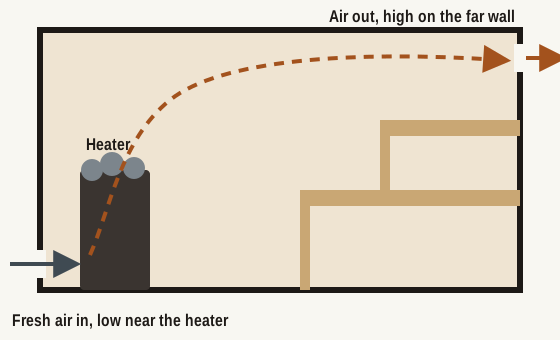
- Put the inlet where the manual says, usually low near the heater, so incoming air is warmed straight away.
- Do not put the outlet directly above or next to the inlet. The fresh air would leave before it circulates.
- Keep the outlet away from the heater's temperature sensor, which otherwise reads the cool draft and keeps the heater running.
- Leave the door gap or vent under the door if the manual relies on it; do not seal it with a weather strip.
Heaters that move air themselves, such as Saunum models with their built-in climate equalizer, may have their own ventilation guidance.
Wood stove saunas
A wood stove draws air from the room to burn the fire, so the sauna needs a fresh-air supply large enough for both the stove and the bathers. The stove and its chimney already pull a lot of air, which helps, but the room still needs a low inlet. Some stoves can take combustion air through a duct from outside.
Fit a carbon monoxide alarm in any building with a wood stove, outside the hot room where it will not be damaged by heat, and never close the chimney damper fully while there are embers. Wood stove trade-offs are covered in electric vs wood-burning sauna heaters.
Fans and mechanical ventilation
A basement sauna without an outside wall often needs an exhaust fan. Use a fan rated for the temperature it will see, mount it in the duct away from the hottest part of the room, and switch it from outside the sauna. Running the fan for a while after each session dries the wood and helps prevent mould.
Infrared cabins
Infrared cabins run cooler and usually come with small built-in vents. They still need a gap around the cabin as the maker specifies and a room that is not airtight. The differences between the two kinds of sauna are covered in infrared vs traditional sauna.
Common mistakes
- Planning vents after the walls are closed, then cutting holes in the wrong place.
- Putting inlet and outlet side by side, so air short-circuits.
- Sealing the room completely in the name of efficiency.
- Venting moist sauna air into an attic or wall cavity instead of outside or into a large room.
- Ignoring the heater manual, which can affect the warranty and the safety listing.
If you are still planning the room, start with how to build a home sauna.
Questions buyers ask
Does a sauna need ventilation?
Yes. Ventilation brings in fresh air, mixes the heat down to the benches, lets the room dry after use and is part of how heaters are designed to run safely.
Where should sauna vents go?
The usual layout is an inlet low on the wall near or under the heater and an outlet high on the opposite wall or low under the benches. Always follow the heater manual.
How many air changes does a sauna need?
Heater makers often suggest about six air changes an hour for a home sauna. Commercial saunas need more. The vent sizes depend on the room and heater.
Does an infrared sauna need ventilation?
Infrared cabins usually have small built-in vents and need the clearance around the cabin that the maker specifies, but less ventilation than a traditional sauna.
Last checked November 8, 2026. Facts come from the brands' own sites and documents. How we check